Language
  English
 中文简体
中文简体 عربى
عربى
Content
- 1 What Is Velvet Fabric and What Makes It Unique?
- 2 Types of Velvet Fabric and Their Distinctive Characteristics
- 3 Velvet Fabric by Fiber Content: Performance and Quality Differences
- 4 Fashion Applications of Velvet Cloth: Choosing the Right Type for Garments
- 5 Velvet Fabric for Home Furnishings and Interior Design
- 6 How to Care for Velvet Fabric: Washing, Drying, and Storing
- 7 Buying Guide: What to Look for When Purchasing Velvet Fabric
- 8 Velvet Fabric in Craft and DIY Projects
What Is Velvet Fabric and What Makes It Unique?
Velvet fabric is a woven textile characterized by its distinctively dense, evenly cut pile — a surface layer of short, upright fibers that create the fabric's signature soft touch, rich depth of color, and characteristic sheen that shifts with the direction of light. Unlike most textiles where the visual and tactile character comes from the weave structure of the base fabric, velvet derives its defining properties almost entirely from this pile layer, which is typically 1–3mm in height depending on the velvet type and intended application. The result is a material that feels luxuriously soft underhand, catches and reflects light in a way that intensifies color saturation, and has a directional quality — commonly described as "nap" — that causes the fabric to appear lighter or darker when viewed from different angles or stroked in opposite directions.
Historically, velvet cloth was one of the most expensive and prestigious textiles in the world, woven from pure silk on specialized double-cloth looms and available only to royalty, aristocracy, and the wealthiest merchant classes. The technical complexity of its production — which required weaving two fabric layers simultaneously connected by the pile threads, then cutting them apart — meant that velvet yardage was extraordinarily labor-intensive to produce. Today, advances in weaving technology and the introduction of synthetic fiber substitutes including polyester, nylon, and viscose rayon have made velvet textile widely accessible across fashion, home furnishing, and decorative applications without sacrificing its distinctive aesthetic character. Understanding the different types, fiber contents, and construction methods of modern velvet fabrics is essential for making informed choices for any application.
Types of Velvet Fabric and Their Distinctive Characteristics
The velvet fabric family encompasses a wide range of distinct types, each produced by different weaving or finishing techniques and offering different aesthetic effects, performance characteristics, and price points. Knowing the differences between velvet types prevents costly mismatches between fabric choice and application requirements.
Cut Velvet
Cut velvet is the classic velvet construction in which the pile loops formed during weaving are cut to produce the characteristic upright, dense fiber surface. This is the most common velvet type and serves as the baseline against which all other varieties are compared. Standard cut velvet has a uniform pile height across the entire fabric surface and is available in a huge range of fiber contents — silk, polyester, rayon, cotton, or blends — and weights suited to everything from lightweight fashion garments to heavy-duty upholstery. The pile direction in cut velvet is clearly directional, meaning all fabric panels in a garment or furniture cover must be cut in the same direction to achieve color consistency in the finished piece.
Crushed Velvet
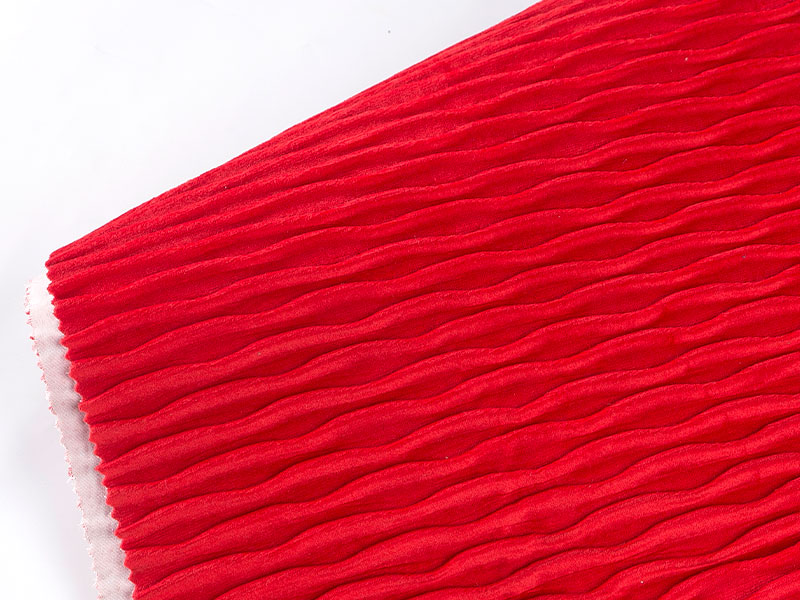
Crushed velvet fabric is produced by twisting the fabric while wet during finishing, or by pressing the pile in multiple irregular directions using mechanical rollers, to create a permanently multi-directional pile that produces a highly reflective, shimmering, marbled-light appearance. The crushed effect breaks up the uniform nap of standard cut velvet and creates an iridescent quality as the varying pile directions catch light differently across the fabric surface. Crushed velvet is widely used in fashion — particularly for evening wear, stage costumes, and statement garments — and in home furnishing for cushion covers, throws, and decorative accessories where maximum visual impact is desired. It is typically made from polyester or viscose which hold the crushed texture better than natural fibers.
Stretch Velvet
Stretch velvet fabric incorporates elastane (spandex/Lycra) or is constructed on a knitted backing rather than a woven base, giving the fabric significant two-way or four-way stretch capability while retaining the soft pile surface of conventional velvet. This construction makes stretch velvet the preferred choice for fitted garments — leggings, bodycon dresses, dancewear, yoga wear, and fitted bodices — where body-conforming stretch and recovery are as important as the fabric's aesthetic character. The stretch backing also makes stretch velvet easier to sew than rigid woven velvet and more forgiving of minor cutting inaccuracies in garment construction, making it accessible for home sewers and small fashion producers.
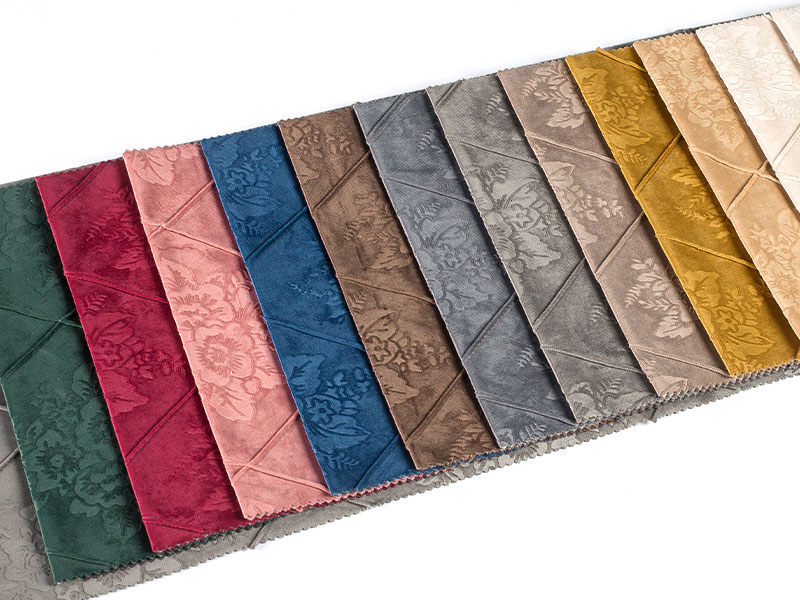
Embossed Velvet
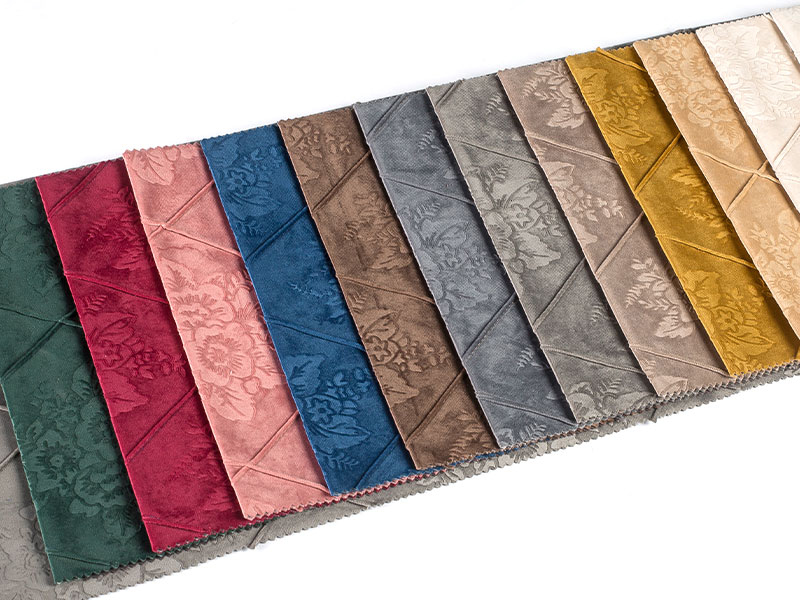
Embossed velvet — also known as stamped or patterned velvet — is produced by pressing heated engraved rollers onto the pile surface, selectively crushing the pile in a pattern while leaving other areas upright. The contrast between crushed and uncut pile areas creates a relief pattern that appears as a design in two tones of the same color — typically a darker, matte crushed area against a lighter, reflective uncut pile background, or vice versa. Floral, geometric, and damask-style embossed velvet patterns are popular for interior design applications including curtains, cushions, and upholstery, and for fashion in structured jackets, coats, and evening wear. Polyester and viscose velvets hold embossed patterns well, while silk velvet may lose embossed patterns with steam pressing.
Burnout Velvet (Devore Velvet)
Burnout velvet, also called devore velvet, is created by printing a caustic chemical paste in a pattern onto a velvet fabric constructed with two different fiber types — typically a silk or rayon pile on a polyester or silk base. The chemical selectively dissolves or burns away the pile fibers in the printed areas, leaving the sheer base fabric exposed in a pattern while the undissolved pile areas remain. The result is an intricate semi-transparent design in which the pile pattern appears rich and opaque against a sheer, fabric background. Devore velvet is a premium fashion fabric used in luxury scarves, eveningwear, and lingerie, and commands a significantly higher price than standard cut or crushed velvet due to its complex production process.
Velveteen and Velour
Velveteen and velour are velvet-related fabrics that are frequently confused with true velvet but have distinct construction differences. Velveteen is a cotton-based fabric with a short, dense weft pile that approximates the appearance of velvet but has a flatter, less lustrous pile and is woven using a filling pile technique rather than the true double-cloth velvet construction. Velveteen is more durable and washable than many true velvets and is widely used for children's clothing, casual outerwear, and soft furnishings. Velour, by contrast, is a knitted fabric with a cut pile surface — it has the stretch and recovery of a knit combined with a soft pile surface, and is commonly used for tracksuits, loungewear, upholstery, and theatrical drapes.
Velvet Fabric by Fiber Content: Performance and Quality Differences
The fiber content of velvet fabric — both the pile fibers and the base fabric — determines its feel, luster, durability, care requirements, and price. The following comparison covers the most important fiber types used in velvet textile production today.
| Fiber Type | Feel and Luster | Durability | Care Requirements | Typical Applications | Price Range |
| Silk Velvet | Exceptionally soft, deep luster, fluid drape | Delicate — low abrasion resistance | Dry clean only; avoid water and heat | Luxury eveningwear, couture, scarves | Very High |
| Polyester Velvet | Soft, bright sheen, holds shape well | Good — resists pilling and crushing | Machine washable (gentle); low iron | Fashion, furnishings, costumes, crafts | Low–Medium |
| Rayon / Viscose Velvet | Silky, semi-matte luster, soft drape | Moderate — weakens when wet | Dry clean preferred; handle wet carefully | Dresses, blouses, drapery, devore velvet | Medium |
| Cotton Velvet / Velveteen | Matte, warm, natural feel | Good — washable and robust | Machine washable; tumble dry low | Children's wear, casual clothing, soft furnishings | Medium |
| Nylon Velvet | Bright, synthetic luster, resilient pile | Very Good — abrasion resistant | Machine washable; quick drying | Upholstery, performance wear, costumes | Medium |
| Velvet Blends (Poly/Rayon, etc.) | Variable — combines properties of component fibers | Moderate to Good | Follow care label — varies by blend | Wide range — fashion and furnishing | Low–Medium |
Fashion Applications of Velvet Cloth: Choosing the Right Type for Garments
Velvet textile has been a significant presence in fashion across centuries, from Renaissance court garments and Victorian evening dress to contemporary runway collections and accessible high street fashion. Today, velvet fabric appears across a remarkably wide spectrum of garment types, and selecting the right velvet variety for each application is key to achieving the intended aesthetic and functional result.
Eveningwear and Formal Garments
For eveningwear — blazers, dinner jackets, gowns, cocktail dresses, and formal separates — the priority is rich color depth, elegant drape, and the characteristic light-catching quality that makes velvet cloth so visually striking under artificial lighting. Silk velvet remains the gold standard for couture and luxury eveningwear, offering an unmatched combination of depth of color and fluid drape, but its delicacy and cost make it impractical for most ready-to-wear. High-quality polyester velvet with a closely woven base fabric and dense, uniform pile delivers comparable visual impact at accessible price points and with significantly better durability and easier care. For structured eveningwear including blazers and tailored jackets, a medium-weight velvet with sufficient body to hold the garment's shape is preferable to the most fluid, lightweight velvets that lack structural integrity.
Casual and Everyday Velvet Clothing
Cotton velveteen and stretch velvet have made velvet fabric a practical choice for everyday clothing far beyond formal occasions. Cotton velveteen trousers, skirts, and shirts offer the warmth and richness of velvet's appearance with the washability and robustness required for regular wear. Stretch velvet — particularly polyester-spandex blends on a knit backing — has become extremely popular for casual dresses, tops, leggings, and loungewear, combining the fabric's visual appeal with the comfort and ease of movement associated with knit fabrics. For these applications, machine washability, color fastness, and pile durability through repeated laundering are the key performance requirements to verify before selecting a velvet fabric.
Velvet Fabric for Sewing and Dressmaking
Velvet is considered one of the more challenging fabrics to sew, but with the right preparation and technique it is entirely manageable even for intermediate home sewers. The primary challenges are the directional nap — which requires all pattern pieces to be cut in the same pile direction — the fabric's tendency to shift during cutting and stitching, and the sensitivity of the pile surface to marking tools, iron pressure, and heat. Stretch velvet on a knit backing is significantly easier to sew than rigid woven velvet and is recommended for beginners working with velvet for the first time. Key equipment recommendations for sewing velvet cloth include a walking foot or even-feed foot to prevent layer shifting, a fine sharp needle (size 70/10 or 80/12), reduced presser foot pressure, and a velvet board or needle board for pressing without crushing the pile.
Velvet Fabric for Home Furnishings and Interior Design
Velvet upholstery fabric and velvet furnishing textiles have experienced a strong resurgence in interior design, moving from a perception as a formal, traditional material to a versatile textile that appears in contemporary, mid-century modern, maximalist, and eclectic interiors alike. The rich depth of color that velvet cloth achieves — particularly in jewel tones like emerald green, sapphire blue, burnt orange, and deep burgundy — makes it a statement material that can anchor an entire room's color palette.
Velvet Upholstery: Selecting the Right Grade
Not all velvet fabrics are suitable for upholstery. Fashion velvets — lightweight, fluid, with delicate pile — will crush, mat, and abrade rapidly under the mechanical stress of regular seating use. True velvet upholstery fabric is specifically engineered for furniture application with a heavier, more tightly woven base fabric, a denser and more resilient pile, and a rub resistance (Martindale or Wyzenbeek test) rating appropriate to the intended use level. For residential upholstery, a minimum Martindale rating of 15,000 rubs is generally recommended for occasional-use pieces, while 25,000 rubs or higher is appropriate for everyday seating. Commercial upholstery for hospitality and contract applications typically requires 50,000 rubs or more. Nylon and polyester pile velvets generally outperform viscose or cotton pile velvets in rub resistance for upholstery applications.
Velvet Curtains and Drapery
Velvet curtain fabric is prized for its exceptional light-blocking capability, thermal insulation, and acoustic dampening properties, as well as its dramatic visual presence. The dense pile structure of velvet drapery fabric significantly reduces light transmission and heat transfer through windows, making velvet curtains a practical as well as decorative choice for bedrooms, media rooms, and older buildings with thermally inefficient windows. For curtain applications, velvet fabric with a heavier base weight — typically 300–600 g/m² — hangs with the best drape and fullness. A 1.5 to 2.5× fabric-width-to-track-width ratio is recommended for velvet drapes to achieve the rich, full gathering typical of formal velvet curtain installations.
Cushions, Throws, and Decorative Accessories
Velvet cushion covers and velvet throws are among the most popular applications of velvet fabric in contemporary interior styling, offering a highly accessible way to introduce the fabric's tactile and visual qualities into a space without the investment of a full velvet sofa or curtain installation. For cushion covers, crushed velvet and embossed velvet patterns add textural interest beyond flat cut velvet, and polyester velvet's wide color range and washability make it the practical choice for most decorative cushion applications. Velvet trimming and ribbon velvet — narrow strips of velvet used as decorative edging on cushions, lampshades, and soft furnishings — are additional ways to incorporate velvet textile into interior design at minimal material cost.
How to Care for Velvet Fabric: Washing, Drying, and Storing
Incorrect care is the most common cause of irreversible damage to velvet fabric — crushed pile, watermarks, color loss, and structural distortion are all typical consequences of inappropriate washing, drying, or ironing of velvet textile. The correct care approach depends primarily on the fiber content and construction of the specific velvet fabric, so always check and follow the care label before proceeding.
- Silk Velvet: Dry clean only without exception. Water causes immediate and permanent watermarks and pile distortion on silk velvet. Even steam should be used with extreme caution — hold a steam iron several centimeters above the fabric surface without contact, and allow the fabric to dry completely before handling. Store silk velvet garments flat or hanging on padded hangers, never folded, to prevent permanent pile crushing at fold lines.
- Polyester Velvet: Most polyester velvets are machine washable on a gentle or delicate cycle in cool water (30°C maximum) using a mild liquid detergent. Turn garments inside out before washing to protect the pile surface. Do not wring or twist. Tumble dry on the lowest heat setting or air dry flat — high heat can melt synthetic fibers and permanently damage the pile. Polyester velvet generally does not require ironing; if pressing is needed, use the lowest heat setting with the fabric pile-side down on a velvet board.
- Viscose/Rayon Velvet: Dry clean is strongly preferred. If hand washing is attempted, use cold water only, handle extremely gently without rubbing or twisting, and support the full weight of the wet fabric when lifting from the water as viscose is significantly weakened when wet and will distort under its own weight. Lay flat to dry on a clean towel, shaping gently while damp.
- Cotton Velveteen: Generally machine washable on a gentle cycle in cool to warm water (up to 40°C). Turn inside out and wash with similar colors. Tumble dry on low heat and remove promptly to minimize wrinkling. Cotton velveteen can be lightly steamed or ironed on the reverse side while slightly damp, using a pressing cloth to protect the pile.
- Reviving Crushed Pile: If velvet fabric pile becomes flattened or crushed from storage or use, hold the fabric pile-side down over a pot of boiling water or use a garment steamer held a few centimeters from the surface — the steam relaxes the pile fibers and allows them to spring back upright. Gently brush the pile in the correct direction with a soft bristle brush while the fabric is still slightly damp to restore uniformity. Never apply direct iron pressure to velvet pile from the right side.
Buying Guide: What to Look for When Purchasing Velvet Fabric
The quality range within velvet fabric is enormous — from cheap, thin polyester velvet with sparse, dull pile to premium silk velvet with exceptional depth and handle. Developing an eye for quality differences allows buyers to make confident decisions whether purchasing in person at a fabric store or sourcing online.
- Pile Density and Height: Run your fingers across the fabric surface — high-quality velvet feels exceptionally plush and soft with a dense, uniform pile that springs back after compression. Sparse or thin pile indicates a lower-grade fabric that will show wear rapidly and have less of velvet's characteristic color depth. A consistent pile height across the entire fabric width, with no bald patches or irregular areas, indicates good manufacturing quality control.
- Base Fabric Weight and Stability: Hold the fabric up to light and examine the base — a well-constructed velvet should have a firm, stable base weave or knit that does not distort easily when pulled on the bias. A flimsy, open base fabric will cause the finished garment or furnishing piece to stretch, bag, and lose shape in use. For upholstery applications, the base fabric weight is especially important for long-term structural integrity.
- Color Consistency and Depth: Quality velvet should show deep, saturated color with clear, consistent nap direction — meaning the fabric appears consistently lighter when stroked one way and darker when stroked the other. Uneven color, streaks, or areas where the pile appears to lie in different directions indicate inconsistent dyeing or finishing. For projects requiring multiple fabric widths or meters, request fabric from the same dye lot to ensure color consistency across the project.
- Width and Usable Yield: Velvet fabric is typically sold in widths of 112–150cm for fashion fabrics and up to 140–160cm for furnishing velvets. Remember that the directional nap requirement means all pattern pieces must be cut in the same direction, effectively reducing the usable yield from a given length of fabric compared to non-directional fabrics. Allow 10–15% additional fabric in your quantity calculation to accommodate the nap direction requirement and any pattern matching on embossed or printed velvet designs.
- Colorfastness to Rubbing and Light: For upholstery and high-use applications, ask the supplier for colorfastness test results — specifically rub fastness (ISO 105-X12) and light fastness (ISO 105-B02). Poor rub fastness means the dye will transfer onto clothing or skin in use — a common problem with intensely dyed velvet textiles in dark colors. Poor light fastness means colors will fade prematurely in window-adjacent installations. A minimum Grade 4 for rub fastness and Grade 5 for light fastness is recommended for residential furnishing applications.
Velvet Fabric in Craft and DIY Projects
Beyond fashion and furnishing, velvet material is a popular choice for a wide range of craft and decorative DIY applications, where its rich appearance and soft texture add a premium feel to handmade projects at accessible material cost — particularly when working with polyester or cotton velveteen off-cuts and remnants.
- Jewelry and Accessory Displays: Velvet fabric is the classic material for lining jewelry boxes, display trays, ring holders, and watch cushions. Its soft pile protects delicate metal and gemstone surfaces from scratches while providing a luxurious backdrop that enhances the visual presentation of jewelry. Cut velvet or velveteen in black, cream, or jewel tones is ideal for these applications — secure with fabric adhesive or staples on a padded backing board for professional results.
- Gift Boxes and Packaging: Lining gift boxes and presentation packaging with velvet fabric instantly elevates the perceived value of the contents. Corporate gift packaging for watches, pens, and premium accessories frequently uses velvet-lined boxes. Cotton velveteen or polyester velvet remnants cut to size and adhered with a fabric spray adhesive or foam tape create professional results without specialized tools.
- Seasonal and Holiday Decorations: Velvet ribbon, velvet bows, and velvet fabric panels are staples of Christmas and autumn seasonal decoration — used in wreaths, table runners, ornament covers, tree skirts, and mantel garlands. Crushed velvet in deep red, forest green, and midnight blue is particularly popular for holiday décor, combining classic festive colors with the fabric's inherently luxurious character.
- Costume and Theater Applications: Velvet cloth has always been central to theatrical costume and stage design, where its ability to absorb stage lighting without glare, combined with its historically rich visual associations, makes it ideal for period costumes, royal and aristocratic characters, and dramatic stage drapery. Polyester velvet in bold colors is the practical choice for costume applications where durability, washability, and cost-efficiency are priorities alongside visual impact.